
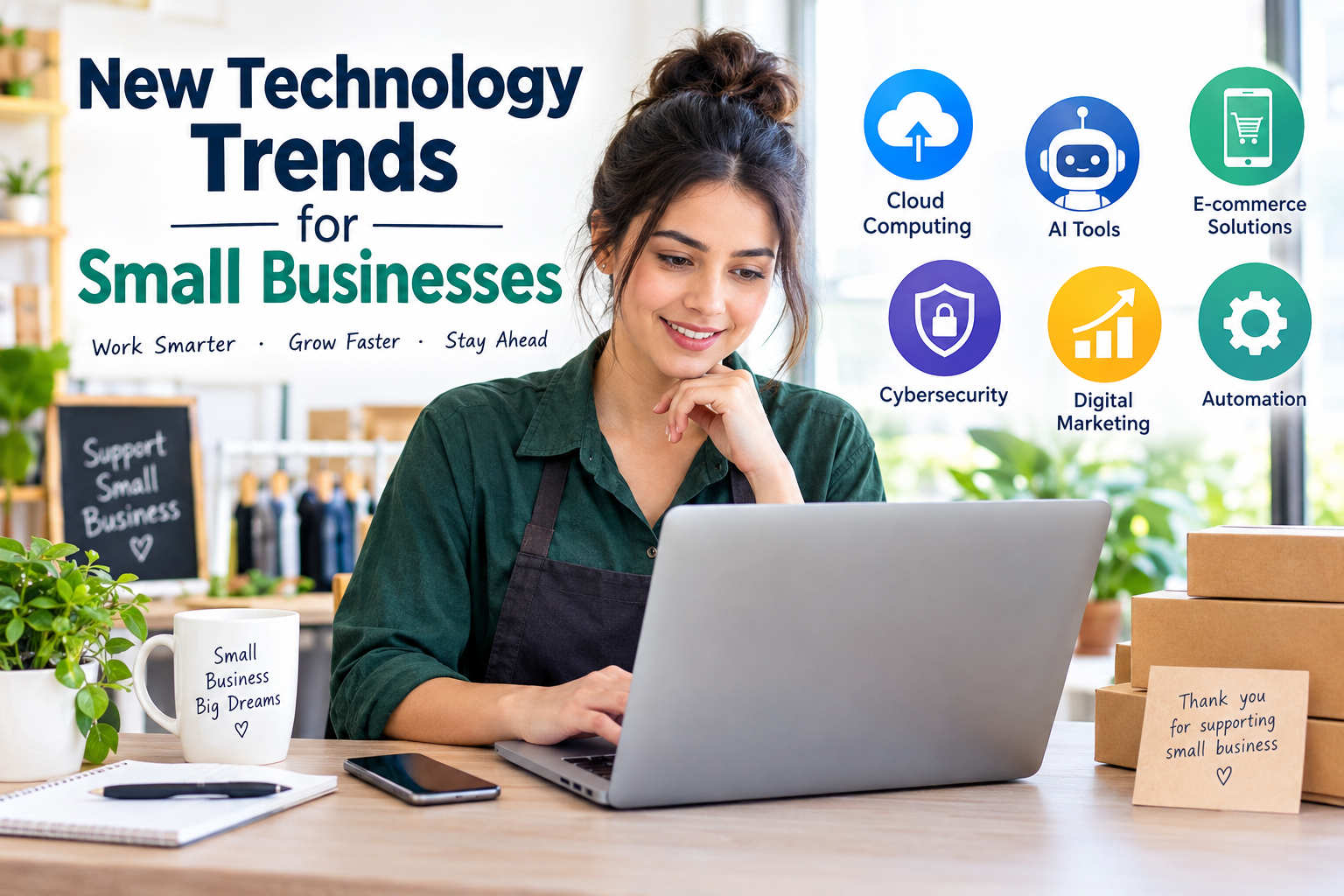
Technology is changing the way small businesses work, communicate with customers, manage money, and grow online. In my opinion, technology is no longer something that only large companies need. Small businesses can also use modern technology to save time, reduce costs, improve customer service, and compete with bigger brands.
The good thing is that many new technology tools are now affordable and easy to use. A small business owner does not always need a large technical team or a huge budget to benefit from them. From artificial intelligence and cloud computing to automation and digital payment systems, there are many useful options available today.
In this article, I will discuss some of the most important new technology trends for small businesses and explain how they can help business owners work smarter and achieve better results.
Why Technology Is Important for Small Businesses
Running a small business involves many responsibilities. A business owner may need to communicate with customers, manage orders, create marketing content, track expenses, answer emails, and handle daily operations.
Technology can make many of these tasks easier. Instead of spending hours doing repetitive work manually, business owners can use digital tools to complete tasks faster.
I believe the main benefit of technology is not simply having modern software. The real benefit is using the right technology to solve real business problems. A simple tool that saves several hours every week can be more valuable than an expensive system with features that a small business never uses.
1. Artificial Intelligence Tools
Artificial intelligence is one of the biggest technology trends for small businesses. AI tools can help businesses with writing, customer support, research, marketing, data analysis, and many other tasks.
For example, a small business owner can use an AI writing tool to create ideas for blog posts, product descriptions, emails, social media posts, and marketing messages. AI can also help organize information and provide useful suggestions.
I think AI is especially helpful for small businesses because it can support a small team without requiring a large increase in staff. However, I would not recommend depending completely on AI. Human judgment, creativity, and personal experience are still important.
The best approach is to use AI as an assistant rather than treating it as a complete replacement for human work.
2. Cloud Computing
Cloud computing has become an important part of modern business technology. Instead of storing everything on one computer, businesses can store files and use software through online services.
Cloud technology allows business owners and employees to access important information from different locations. This can be very useful for remote teams and businesses that work from multiple places.
Cloud storage can also make file sharing easier. Team members can work on documents, spreadsheets, and other files without constantly sending attachments through email.
From my point of view, cloud computing is one of the most practical technology trends for small businesses because it provides flexibility and can reduce the need for expensive physical equipment.
3. Business Automation
Automation is another technology trend that can help small businesses save time. Automation means using software to complete repetitive tasks with little manual effort.
For example, businesses can automate appointment reminders, email responses, invoices, customer follow ups, social media scheduling, and other routine activities.
Imagine spending several hours every week sending the same type of reminder to customers. An automated system can handle much of that work while the business owner focuses on more important responsibilities.
Automation does not mean removing the human side of a business. Instead, it can give business owners more time to focus on customers, planning, and business development.
4. Digital Payment Solutions
Digital payments are becoming increasingly important for modern businesses. Customers now expect convenient ways to pay for products and services.
Depending on the location and type of business, payment options can include online payment gateways, mobile payments, bank transfers, digital wallets, and card payments.
For small businesses, digital payments can make transactions faster and more convenient. They can also make it easier to maintain organized payment records.
I believe offering convenient payment options can improve the customer experience because people appreciate having choices when completing a purchase.
5. E Commerce Technology
E commerce technology has created new opportunities for small businesses. A business does not necessarily need a physical store to reach customers.
Small businesses can create online stores where customers can browse products, read descriptions, place orders, and make payments. Social media platforms can also help businesses promote their products and direct customers toward online stores.
Modern e commerce tools make it easier to manage products, orders, inventory, and customer information.
For small businesses that sell physical products, having an online presence can open the door to customers outside their local area.
6. Cybersecurity Tools
As businesses become more dependent on technology, cybersecurity becomes increasingly important. Small businesses can also become targets of online threats, especially when they handle customer information and financial data.
Basic cybersecurity practices include using strong passwords, enabling two factor authentication, keeping software updated, backing up important files, and educating employees about suspicious emails and links.
Businesses should also use trusted security software and carefully control access to important accounts.
In my opinion, cybersecurity should not be treated as something that businesses think about only after a problem occurs. Preventing a security issue is usually much easier than recovering from one.
7. Social Media Marketing Technology
Social media continues to provide useful opportunities for small businesses. Platforms can help businesses communicate with customers, introduce products, share educational content, and build brand awareness.
Technology has also made social media management easier. Businesses can use scheduling tools to prepare content in advance and monitor basic engagement information.
Small businesses can also use AI powered tools to generate content ideas, create captions, organize campaigns, and understand audience interests.
However, I believe businesses should focus on useful and genuine content instead of simply posting frequently. Customers are more likely to trust businesses that provide helpful information and communicate naturally.
8. Customer Relationship Management Tools
Customer relationship management tools, often called CRM tools, help businesses organize customer information and interactions.
A CRM system can help keep track of customer inquiries, previous purchases, follow ups, and communication history.
For a growing business, this information can become difficult to manage using notebooks or separate spreadsheets. A CRM system can bring important customer information into one organized place.
Better organization can also help businesses provide more personal customer service.

9. Data Analytics for Better Decisions
Data analytics is another important technology trend for small businesses. Business owners can use data to understand sales, website traffic, customer behavior, marketing performance, and other areas.
For example, a business can analyze which products receive the most attention or which marketing channels bring the most customers.
I think data is most useful when it helps answer practical questions. Small business owners do not need complicated reports for every decision. Even basic information can reveal useful patterns.
The goal should be to use data to make smarter decisions rather than relying only on assumptions.
10. Remote Work Technology
Remote work technology has changed how many businesses operate. Communication platforms, cloud storage, video meeting tools, project management systems, and collaboration software allow teams to work together from different locations.
For small businesses, remote work technology can provide access to a wider talent pool and may reduce some office related expenses.
It can also provide flexibility for employees. However, businesses need clear communication and well organized workflows to make remote work successful.
11. Chatbots and Digital Customer Support
Customer support is another area where technology can help small businesses. Chatbots can answer common questions, provide basic information, and guide customers toward useful resources.
A chatbot can be available outside normal business hours, which can be helpful for customers who need quick answers.
However, businesses should still provide access to human support when a question is complex or requires personal attention.
I believe the best customer support combines automation with human communication. Technology can handle simple questions while employees focus on situations that require understanding and judgment.
12. Mobile Friendly Business Tools
More business activities are now managed through smartphones and tablets. Mobile friendly business tools allow owners to check orders, respond to customers, monitor sales, manage schedules, and communicate with employees while away from a computer.
This flexibility can be especially valuable for small business owners who are constantly moving between meetings, stores, warehouses, or customer locations.
Having mobile access to important business information can make daily management much easier.
How Small Businesses Can Adopt New Technology
One mistake I think small businesses should avoid is trying to adopt every new technology at once. New tools appear regularly, but not every tool is useful for every business.
The better approach is to identify the biggest problems first. If a business spends too much time answering repetitive questions, customer support automation may help. If files are difficult to organize, cloud storage may be a better starting point. If marketing is taking too much time, content and scheduling tools may be useful.
Business owners should also consider cost, security, ease of use, and long term value before choosing a technology tool.
Final Thoughts
New technology trends for small businesses are creating exciting opportunities. Artificial intelligence, cloud computing, automation, digital payments, e commerce, cybersecurity, data analytics, and customer relationship tools can all help businesses improve their daily operations.
From my point of view, the most important thing is not following every technology trend. It is choosing technology that genuinely solves a problem and provides value.
Small businesses do not need to use the most expensive software or the newest system available. They simply need the right tools for their specific needs.
As technology continues to develop, businesses that learn how to use digital tools effectively can improve productivity, provide better customer experiences, and create new opportunities for growth. The future of small business is becoming more digital, and learning to use technology wisely can be one of the best investments a business owner makes.


