Introduction
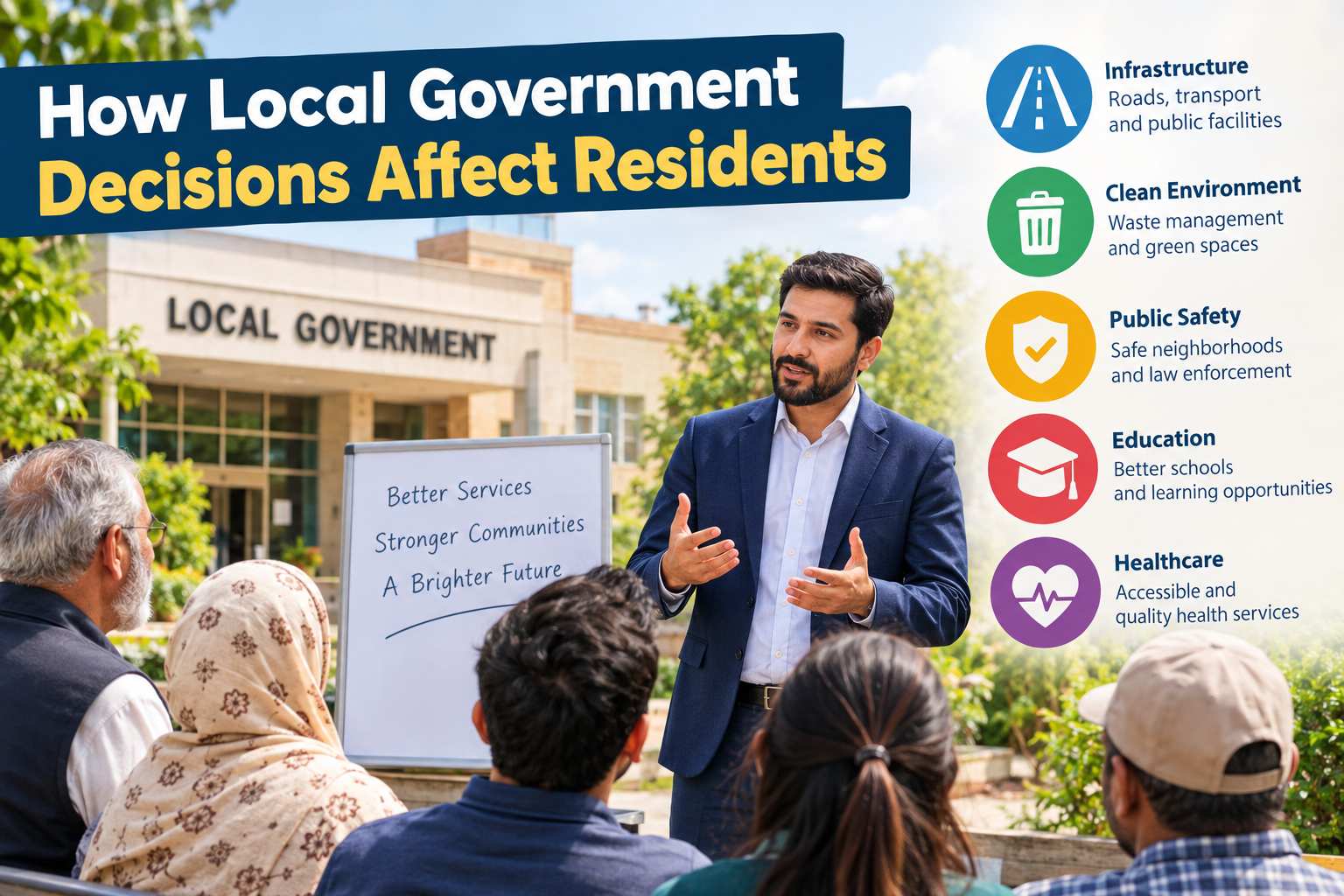
Local government plays an important role in our daily lives, even when we do not always notice its work. From clean streets and safe roads to waste collection, public parks, and water supplies, many of the services we use every day are influenced by decisions made at the local level. In my opinion, a well managed local government can make a community more comfortable, safer, and better organized.
When we talk about government decisions, we often think about national leaders and major political issues. However, local government decisions can have a more direct effect on our daily routines. A decision to repair a damaged road, improve street lighting, or organize waste collection can change the way people live in a neighborhood.
Understanding how local government decisions affect residents helps people become more informed citizens. It also encourages them to participate in community discussions and ask for improvements where they are needed. In this article, I will explain the major ways local government decisions influence residents and why responsible local leadership matters for every community.
1. Improving Roads and Public Infrastructure
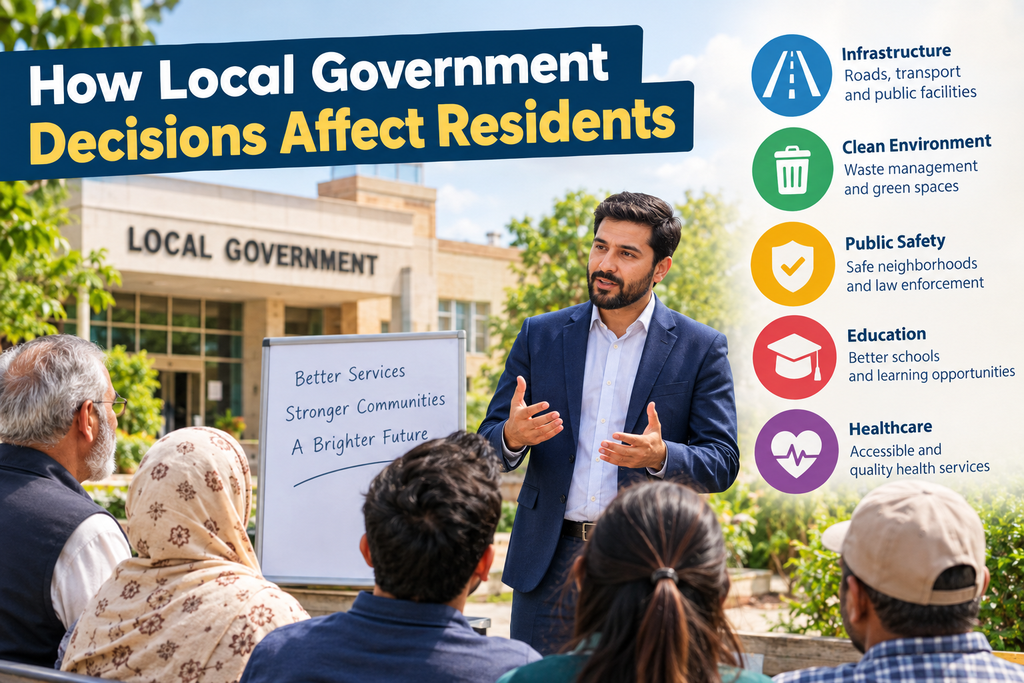
One of the most visible ways local government affects residents is through infrastructure development. Roads, footpaths, drainage systems, streetlights, and public buildings are important parts of a functioning community.
When local authorities maintain roads properly, residents can travel more comfortably and safely. Good roads also help students reach schools, workers travel to their workplaces, and businesses deliver products to customers. On the other hand, damaged roads and poorly maintained streets can create traffic problems, vehicle damage, and unnecessary delays.
In my view, infrastructure spending should focus on the needs of the community rather than only on projects that look impressive. Repairing a dangerous road or improving a drainage system may provide greater benefits than building something that residents rarely use.
Local government should also consider people with disabilities, older residents, children, and pedestrians when planning public infrastructure. Accessible footpaths, safe crossings, and suitable public facilities can make a neighborhood more welcoming for everyone.
2. Maintaining Cleanliness and Waste Management
Cleanliness is another important responsibility that can affect the health and comfort of residents. Local government decisions often determine how waste is collected, where rubbish is disposed of, and how public areas are maintained.
When waste collection services operate regularly, streets remain cleaner and residents are less likely to face problems caused by accumulated rubbish. Proper waste management can also help reduce unpleasant smells, blocked drains, and conditions that attract pests.
However, cleanliness cannot depend on government services alone. Residents also have a responsibility to dispose of rubbish correctly and avoid throwing waste into streets, waterways, and empty plots.
I believe the best results come when local authorities provide reliable waste collection and residents cooperate with the system. Public awareness campaigns, recycling facilities, and clear waste disposal rules can encourage better habits.
A clean neighborhood improves the appearance of a community and can make public spaces more pleasant for families, visitors, and local businesses.
3. Supporting Public Health and Sanitation
Local government decisions can influence public health through sanitation services, clean water initiatives, drainage maintenance, and environmental management. These services are especially important in areas where poor sanitation can contribute to preventable health problems.
For example, blocked drains can lead to standing water, unpleasant odors, and increased risks from certain insects. Poorly managed waste can also affect the quality of the surrounding environment.
Local authorities can help by maintaining drainage systems, monitoring public sanitation facilities, supporting community cleanliness programs, and coordinating with relevant health departments.
Access to healthcare facilities varies by location, and responsibilities are not the same everywhere. Nevertheless, local authorities may support health awareness campaigns, local clinics, vaccination programs, or emergency preparedness, depending on their legal powers and available resources.
In my opinion, public health should be considered whenever local government plans a development project. A project should not be judged only by its cost or appearance. Its potential effects on residents’ health and quality of life are equally important.
4. Influencing Education and Learning Opportunities
Education is essential for personal development and community progress. Local government decisions may affect school facilities, public libraries, learning centers, transport access, and other services that support students.
In some places, local authorities help maintain school buildings, improve nearby roads, provide public learning spaces, or coordinate educational programs. The exact responsibilities depend on the country’s laws and the structure of its education system.
A safe route to school can make a meaningful difference for students and parents. Similarly, a well maintained public library or community learning center can provide opportunities for people who do not have access to many educational resources at home.
I believe local government should pay attention to the needs of children and young people when planning community development. Better access to education can help students build skills, discover career opportunities, and contribute to society in the future.
Residents can support these efforts by sharing concerns about unsafe school surroundings, damaged facilities, and barriers that prevent children from learning effectively.
5. Creating Safer Neighborhoods
Public safety is another area where local decisions matter. Street lighting, road design, pedestrian crossings, emergency planning, and the maintenance of public spaces can all influence how safe residents feel.
For example, well lit streets can improve visibility for drivers and pedestrians at night. Proper road signs and traffic calming measures can also help reduce the risk of accidents in busy residential areas.
Local government may work with police departments, emergency services, and community organizations to address safety concerns. However, responsibility for law enforcement and emergency services differs between jurisdictions.
In my opinion, residents should be able to report dangerous locations and receive clear information about how their concerns will be handled. Authorities can use community feedback to identify areas that need better lighting, safer crossings, or improved public facilities.
A safer neighborhood allows people to use public spaces with greater confidence and helps families feel more comfortable in their surroundings.
6. Affecting Local Businesses and Employment
Local government decisions can influence the business environment and create opportunities for economic growth. Business permits, market regulations, public transport, road maintenance, and town planning can affect how easily businesses operate.
When commercial areas are clean, accessible, and properly maintained, customers may find it easier to visit shops and services. Reliable infrastructure can also help businesses receive supplies and serve their customers efficiently.
On the other hand, unclear regulations, unnecessary delays, or poorly planned construction can create difficulties for business owners. Small businesses may be particularly affected when roads are closed or public facilities are disrupted without proper planning.
I believe local authorities should create fair and transparent rules for businesses. They should also communicate clearly about permit requirements, fees, construction schedules, and changes that may affect commercial areas.
Supporting responsible local businesses can strengthen the community because these businesses provide services, employ workers, and contribute to the local economy.
7. Managing Local Taxes and Public Budgets
Local government decisions about budgets and taxes can directly affect residents. Public money may be used for road repairs, waste collection, parks, drainage, public facilities, and other services.
Residents naturally want their money to be spent responsibly. When authorities explain how public funds are collected and used, people can better understand which services are being funded and why certain projects are prioritized.
A responsible budget should consider both immediate needs and long term development. For example, repairing a damaged drainage system may prevent more expensive problems later. Similarly, maintaining existing public facilities can sometimes provide better value than constructing new ones without a clear need.
In my view, transparency is essential when local government manages public funds. Residents should have access to understandable budget information and opportunities to ask questions through appropriate public channels.
Good financial management can improve services while helping authorities use limited resources more effectively.
8. Improving Parks and Public Spaces
Parks, playgrounds, walking paths, and community centers give residents places to relax, exercise, and spend time together. Decisions about the construction and maintenance of these spaces can influence the overall quality of life in a neighborhood.
A well maintained park can provide children with space to play and give adults an opportunity to walk or enjoy fresh air. Public spaces can also support community events and help residents build stronger relationships with their neighbors.
However, public spaces require regular care. Damaged equipment, poor lighting, overflowing rubbish bins, and neglected green areas can reduce their usefulness.
I believe local authorities should consider the needs of different age groups when planning parks and recreational facilities. Safe playgrounds, accessible paths, seating areas, and suitable green spaces can make public facilities useful to a wider range of residents.
Residents can also help by keeping parks clean, respecting public property, and reporting maintenance problems.
9. Influencing Housing and Community Development
Local government decisions can shape how neighborhoods grow. Planning rules, building approvals, zoning policies, drainage requirements, and development permits can influence where homes, shops, offices, and public facilities are built.
Good planning can help communities develop in an organized way. It can make space for roads, public transport, parks, and essential services while reducing conflicts between residential and industrial areas.
Poor planning can create overcrowded streets, traffic congestion, inadequate drainage, and pressure on existing public facilities. New housing developments may also create additional demand for schools, water supplies, and waste collection.
In my opinion, development should not focus only on constructing more buildings. Authorities should also consider whether the surrounding infrastructure can support the growing population.
Residents should have opportunities to learn about major development proposals and raise concerns through available consultation processes. Community input can help identify local problems before decisions become difficult or expensive to change.
10. Protecting the Environment
Environmental decisions made by local authorities can influence air quality, green spaces, drainage, noise levels, and the general appearance of a community.
Planting trees, maintaining parks, improving waste disposal, and supporting recycling programs are examples of actions that may help protect the local environment. Authorities can also enforce applicable rules concerning construction, pollution, and land use.
Environmental protection is important because residents depend on their surroundings for recreation, health, and daily activities. Green spaces can provide shade and make neighborhoods more pleasant, while effective drainage management can help reduce some risks associated with heavy rainfall.
I believe environmental planning should be part of every major community development decision. Authorities should consider the long term effects of projects rather than focusing only on immediate benefits.
Residents can contribute by conserving water, reducing litter, planting suitable trees, and participating in local environmental activities.
11. Encouraging Public Participation and Accountability
Local government works best when residents have meaningful opportunities to participate in decisions that affect them. Community meetings, public consultations, official complaint channels, and local surveys can help authorities understand residents’ needs.
For example, residents may identify a road that needs repair, a drainage problem that occurs after rainfall, or a public area that requires better lighting. Sharing specific information can help officials understand where improvements are needed most.
However, public participation should involve more than simply collecting complaints. Authorities should explain which actions are possible, how projects are prioritized, and why some requests may take longer to address.
In my view, residents should also make an effort to understand local rules, attend relevant meetings when possible, and follow official updates. Respectful communication and practical suggestions can make discussions more productive.
Accountability matters because residents need confidence that public decisions are being made fairly and that public resources are being managed responsibly.
12. How Residents Can Respond to Local Government Decisions
Residents do not need to hold public office to contribute to community improvement. There are several practical ways to become involved.
First, learn which local authority is responsible for the issue. Responsibilities may be divided between municipal bodies, district administrations, regional governments, and national agencies.
Second, report problems through official channels. Include clear details about the location, nature of the issue, and any relevant evidence that can be shared safely.
Third, stay informed about local budgets, development projects, public meetings, and service announcements. Reliable information helps residents distinguish confirmed decisions from rumors.
Fourth, cooperate with community initiatives. Keeping streets clean, protecting public property, and respecting local regulations can support government efforts.
Finally, follow up on unresolved concerns in a respectful and organized way. If many residents experience the same problem, a collective request may help authorities understand its wider impact.
These actions may seem small, but informed participation can help communities identify priorities and encourage better public services.