Introduction
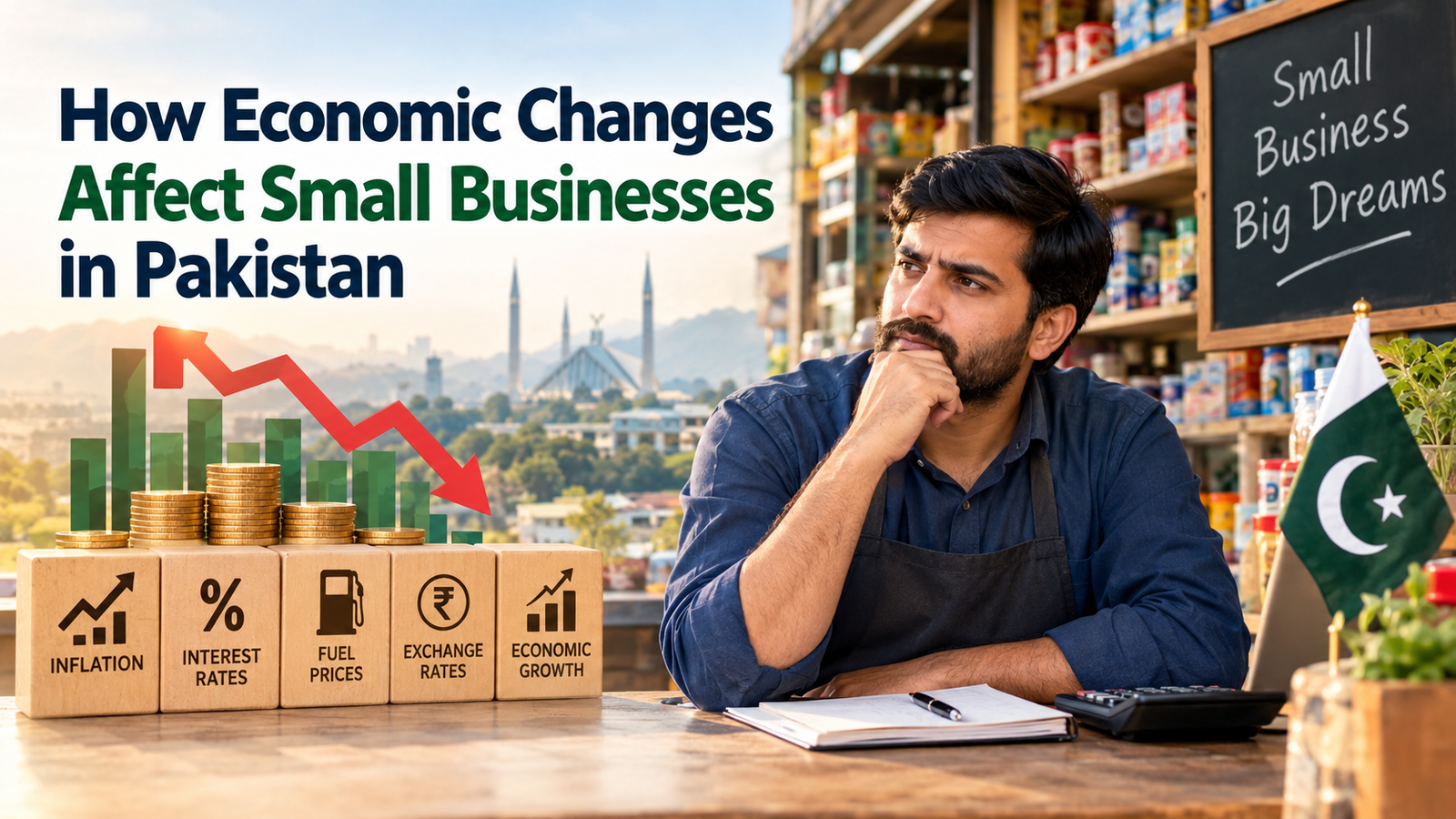
Small businesses play an important role in Pakistan’s economy. From grocery stores and clothing shops to restaurants, workshops, online stores, and small manufacturing units, these businesses provide employment and support millions of families. In almost every city and village, small business owners work hard to earn a living, serve their customers, and build a better future.
In my view, small businesses are among the most important parts of Pakistan’s economic system because they connect local communities with everyday goods and services. However, running a small business is not always easy. Changes in inflation, electricity prices, fuel costs, interest rates, taxes, and the value of the Pakistani rupee can directly affect daily operations.
When the economy becomes unstable, small business owners often face difficult decisions. They may need to increase prices, reduce expenses, change suppliers, or find new ways to attract customers. Understanding how economic changes affect small businesses in Pakistan is important for entrepreneurs who want to protect their income and build sustainable businesses.
1. Inflation Increases Business Expenses
Inflation is one of the biggest challenges affecting small businesses in Pakistan. When prices rise, business owners usually have to pay more for raw materials, products, packaging, transportation, rent, and other operating expenses.
For example, a small grocery store may purchase cooking oil, flour, sugar, rice, and other essential products from wholesalers. If wholesale prices increase, the shopkeeper must decide whether to raise retail prices or accept a smaller profit margin.
The same problem affects clothing stores, restaurants, bakeries, and small manufacturing businesses. A restaurant may have to pay more for vegetables, meat, cooking oil, and gas while customers become more careful about their spending.
In my opinion, inflation creates a difficult balance between maintaining profitability and keeping products affordable. Increasing prices too quickly can discourage customers, but keeping prices unchanged for too long can reduce profits.
Small businesses can respond by monitoring expenses, comparing suppliers, reducing unnecessary waste, and reviewing prices regularly. Careful purchasing decisions can help business owners manage inflation without compromising product quality.
2. Rising Electricity and Fuel Prices
Electricity and fuel costs have a direct effect on business operations in Pakistan. Many small businesses depend on electricity for lighting, refrigeration, machinery, computers, air conditioning, and other essential equipment.
When electricity bills increase, shopkeepers and entrepreneurs have less money available for inventory, salaries, maintenance, and expansion. Businesses that use refrigeration, ovens, or heavy machinery may face particularly high operating costs.
Fuel prices also affect transportation. Suppliers may charge more to deliver goods, while business owners who purchase stock from wholesale markets must spend more on travel and transport.
For instance, a small bakery may experience higher costs for electricity, gas, flour delivery, and packaging. Even if customer demand remains unchanged, its profit margin can become smaller.
Business owners can reduce some of these expenses by switching off unused equipment, using energy efficient lighting, maintaining machinery, and planning deliveries more effectively. Where practical and financially suitable, solar energy may also help reduce long term electricity expenses.
3. Changes in the Pakistani Rupee and Import Costs
Exchange rate fluctuations can create additional difficulties for small businesses, particularly those that depend on imported products or materials.
When the Pakistani rupee loses value against foreign currencies, imported goods can become more expensive. Electronics retailers, mobile phone shops, clothing businesses using imported fabrics, and sellers of machinery or spare parts may experience higher purchasing costs.
A business owner might place an order at one price and discover that the next shipment costs considerably more because the exchange rate has changed. This makes it difficult to set prices and calculate future profits accurately.
Even businesses that do not import products directly can be affected because local suppliers may rely on imported raw materials, packaging, chemicals, or equipment.
In my view, small businesses should avoid depending entirely on one supplier or one imported product whenever reasonable alternatives exist. Comparing local and imported options, maintaining relationships with reliable suppliers, and reviewing stock levels can help reduce exposure to unexpected price changes.
4. Interest Rates and Access to Business Loans
Access to affordable financing is important for small businesses that want to expand, purchase equipment, increase inventory, or open another branch.
However, changes in interest rates can make borrowing more expensive. When financing costs rise, entrepreneurs may postpone expansion plans or avoid taking loans altogether.
For example, a small clothing manufacturer may want to purchase new sewing machines to increase production. If the cost of borrowing is too high, the owner may continue using existing equipment, even when additional capacity could generate more sales.
Limited access to financing can also affect seasonal businesses. Retailers may need additional stock before Eid, wedding seasons, or other busy periods, but insufficient working capital can prevent them from meeting customer demand.
Business owners should compare financing options carefully, understand all repayment terms, and calculate whether expected additional income can cover borrowing costs. Keeping personal and business expenses separate can also improve financial planning.
Before taking a loan, an entrepreneur should prepare a realistic budget and consider how repayments would be managed if sales declined unexpectedly.
5. Changes in Customer Purchasing Power
Economic conditions influence how much customers can afford to spend. When household expenses increase, many families prioritize essential items such as food, housing, utilities, education, and transportation.
As a result, customers may reduce spending on clothing, dining out, home decorations, electronics, and other non essential products.
Small businesses often notice these changes quickly. A shop that previously sold premium products may experience stronger demand for lower priced alternatives. Restaurants may receive fewer orders, while online sellers may see customers compare more options before making a purchase.
In my opinion, understanding customer behavior is just as important as controlling business expenses. Entrepreneurs should pay attention to what customers actually need instead of assuming that previous buying patterns will continue.
Offering different price ranges, practical product bundles, reliable service, and transparent pricing can help businesses remain competitive. However, reducing prices without calculating costs can create further financial problems. Every offer should support both customer value and business sustainability.
6. Taxes and Government Regulations
Taxes and regulatory requirements are another important consideration for small businesses in Pakistan. Business owners may need to manage income tax obligations, sales tax where applicable, registration requirements, invoices, and other legal responsibilities.
Changes in tax rates or compliance procedures can affect operating costs and administrative work. For a small shop with limited staff, understanding unfamiliar paperwork can be challenging.
Some entrepreneurs also struggle to maintain proper financial records, which can make tax compliance and future loan applications more difficult.
I believe that clear information and simple compliance procedures can help small businesses operate with greater confidence. Entrepreneurs should keep accurate records of sales, purchases, expenses, and payments. They should also consult qualified tax professionals when their circumstances require specialized advice.
Understanding applicable tax rules helps business owners avoid preventable penalties and make better financial decisions. Although taxes can affect profitability, proper planning allows entrepreneurs to include these obligations in their budgets rather than treating them as unexpected expenses.
7. Employment and Salary Pressures
Economic changes also influence employment in small businesses. When living costs rise, employees may request higher salaries to manage household expenses. At the same time, business owners may struggle to afford wage increases because their own expenses are rising.
This creates a difficult situation for both employers and workers. Employees need sufficient income, while businesses need to maintain enough cash flow to continue operating.
Some businesses may respond by reducing working hours, delaying recruitment, or asking existing employees to handle additional responsibilities. These decisions can affect productivity and customer service if they are not managed carefully.
Small business owners can improve efficiency by training employees, organizing tasks clearly, and reducing unnecessary operational delays. Fair communication is also important when financial difficulties affect staffing decisions.
In my view, retaining experienced and reliable employees can be more valuable than repeatedly hiring and training new workers. Businesses should explore practical ways to improve productivity while treating employees fairly.
8. Digital Business Opportunities in a Changing Economy
Although economic changes create challenges, they can also encourage innovation. Digital platforms have made it possible for many small businesses in Pakistan to reach customers beyond their immediate neighborhoods.
Social media pages, online marketplaces, messaging applications, and business websites can help entrepreneurs display products, communicate with buyers, and receive orders without renting a large commercial space.
For example, a home based clothing business can promote its products online, while a small bakery can use social media to share menus and receive local orders. A repair service can attract customers through online listings and customer recommendations.
Digital marketing can be more affordable than some traditional advertising methods, although it still requires time, planning, and sometimes paid promotion.
Businesses should also consider payment security, delivery costs, customer privacy, and return policies when selling online. Building trust through accurate product descriptions, timely communication, and dependable service can encourage repeat purchases.
In my opinion, digital tools offer practical opportunities for small businesses that want to increase visibility and adapt to changing customer habits.
9. Practical Ways to Protect Small Businesses
Small business owners cannot control every economic change, but they can take steps to improve financial stability.
First, they should prepare a monthly budget that includes rent, salaries, electricity, transportation, inventory, taxes, and other regular expenses. Reviewing actual spending against this budget can help identify problems before they become serious.
Second, maintaining an appropriate cash reserve can provide protection against unexpected bills or temporary declines in sales. Even small, consistent savings can improve financial flexibility over time.
Third, businesses should monitor inventory carefully. Buying too much stock can tie up money, while buying too little can lead to missed sales. Owners should identify their best selling products and adjust purchasing decisions according to demand.
Fourth, developing relationships with reliable suppliers can improve communication and make it easier to compare prices or negotiate reasonable payment arrangements.
Finally, entrepreneurs should avoid making major decisions based only on short term market changes. Before expanding, hiring additional workers, or purchasing expensive equipment, they should examine their cash flow and realistic sales expectations.
10. The Role of Government and Financial Institutions
The long term success of small businesses also depends on the wider economic environment. Stable economic policies, reliable energy supplies, accessible financing, and clear regulations can help entrepreneurs plan for the future.
Government institutions and financial organizations can support small businesses through suitable financing programs, practical business training, digital skills development, and straightforward registration procedures.
Better infrastructure and dependable transportation can also reduce the cost of moving products between suppliers and customers.
Small businesses may benefit from local training programs that teach bookkeeping, inventory management, online marketing, and basic financial planning. Such skills can help entrepreneurs make informed decisions even when economic conditions remain difficult.
Support programs are most useful when eligibility requirements are transparent and business owners can access reliable information about application procedures. Consistent policies can encourage investment and give entrepreneurs greater confidence in expanding their operations.
Conclusion
Economic changes affect small businesses in Pakistan in many ways, including higher operating expenses, changing customer demand, expensive financing, exchange rate fluctuations, and pressure on employee salaries. These challenges can reduce profits and make long term planning more difficult.
However, small businesses can improve their chances of success through careful budgeting, effective inventory management, responsible borrowing, digital marketing, and a better understanding of customer needs.
From my perspective, the most important lesson is that business owners must remain flexible without losing sight of their long term goals. They should regularly review their expenses, understand market conditions, and make decisions based on realistic financial information.
At the same time, a supportive economic environment can help entrepreneurs create jobs, serve communities, and contribute to Pakistan’s development. When small businesses receive the right opportunities and manage their resources wisely, they can remain resilient even during uncertain economic periods.
Small businesses are more than shops and commercial activities. They represent the hard work, ambitions, and livelihoods of countless people across Pakistan. Supporting their growth is an important step toward building a stronger and more sustainable economy.