Introduction
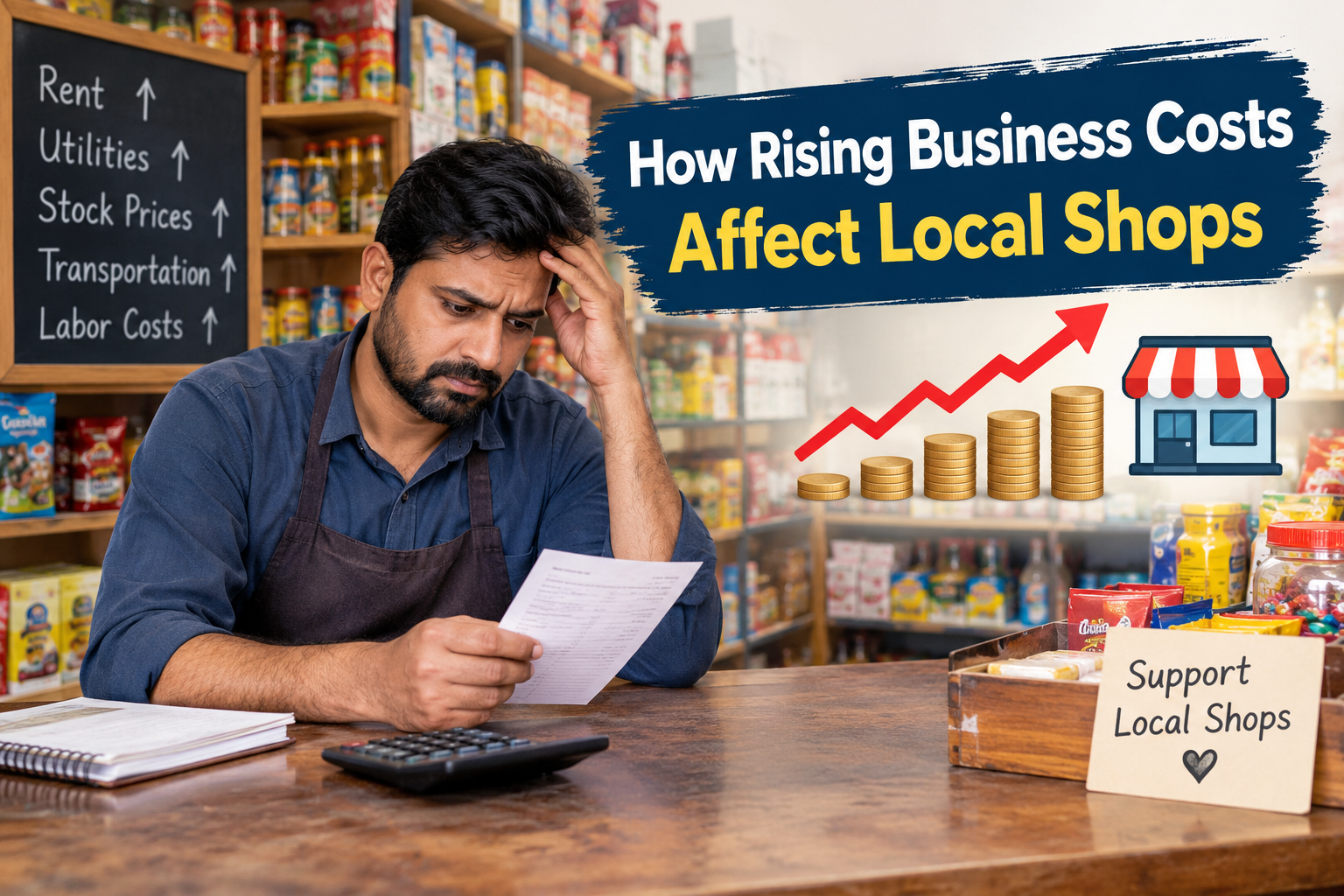
Local shops play an important role in our daily lives. From small grocery stores and clothing shops to stationery stores, bakeries, and neighborhood convenience stores, these businesses provide products and services that people need every day. They also create employment opportunities and support local economies. However, rising business costs have become a major challenge for many small shop owners.
In my view, running a local shop is becoming more difficult because business owners have to manage several expenses while trying to keep their products affordable. Rent, electricity bills, transportation charges, wholesale prices, employee wages, and other operating costs can increase the financial pressure on a small business. At the same time, customers may be less willing to spend money because their own household expenses are increasing.
Understanding how rising business costs affect local shops helps explain why some businesses increase their prices, reduce their expenses, or struggle to remain open. It also shows why supporting local businesses is important for communities.
1. Increasing Wholesale Prices
One of the biggest challenges for local shops is the rising cost of purchasing products from wholesalers. Shop owners usually buy goods in bulk and sell them to customers at a higher price to earn a profit. When suppliers increase their prices, retailers must decide whether to increase their own prices or accept a smaller profit margin.
For example, a grocery shop owner may purchase cooking oil, flour, sugar, rice, and other household essentials at higher rates than before. If the shop owner keeps selling these products at the previous prices, the profit on each sale may become too small to cover other expenses.
In my opinion, this problem is especially difficult for small retailers because they often have less bargaining power than large supermarkets. Bigger businesses may purchase larger quantities and negotiate better prices with suppliers. Smaller shops may not have the same advantage.
As a result, rising wholesale prices can reduce profits and make it harder for local shops to compete with larger retailers.
2. Higher Electricity and Utility Bills
Electricity and other utility expenses are another major concern for local businesses. Shops need electricity for lighting, fans, air conditioning, refrigerators, freezers, computers, and other equipment.
For businesses that sell milk, meat, frozen food, or cold drinks, electricity is particularly important because refrigeration must continue throughout the day. When electricity bills increase, shop owners may have to spend a larger portion of their income simply keeping their businesses operational.
For example, a small grocery store may need refrigerators to protect perishable products. Turning them off to save money could lead to spoiled goods and financial losses. Therefore, the owner cannot always reduce electricity consumption without affecting product quality.
Some shopkeepers try to manage these expenses by using energy efficient lights, switching off unnecessary equipment, improving ventilation, or investing in more efficient appliances.
Although these steps can help, the initial cost of purchasing energy efficient equipment may also create difficulties for businesses with limited budgets.
3. Rising Shop Rent
Commercial rent can significantly affect the financial condition of a local shop. Many small businesses operate from rented buildings in busy markets, shopping streets, and residential neighborhoods.
When landlords increase monthly rent, shop owners must find additional money to cover the difference. This can be particularly challenging for businesses that depend on regular customers and operate with relatively small profit margins.
A shop located in a busy commercial area may benefit from higher customer traffic, but it may also face higher rental charges. Moving to a cheaper location is not always a practical solution because the new location may attract fewer customers.
In my view, shop owners should carefully calculate their rental expenses before signing a lease. They should also consider whether expected sales can reasonably cover rent, utility bills, employee wages, and other operating costs.
If rental expenses continue to rise faster than sales, some businesses may eventually decide to relocate, reduce their shop size, or close their operations.
4. Transportation and Delivery Expenses
Transportation costs influence almost every type of local retail business. Products must travel from manufacturers and wholesalers to shops before they can be sold to customers.
When fuel prices, vehicle maintenance expenses, and delivery charges increase, suppliers may pass some of these additional costs on to retailers. This means shop owners can end up paying more even when the original product has not changed.
Small retailers may also spend money collecting goods from wholesale markets. These trips can become more expensive when fuel prices rise or transport services increase their rates.
For example, a clothing shop owner who regularly purchases stock from another city may face higher travel and delivery expenses. These additional costs can reduce the money available for purchasing new designs or expanding the product range.
To control transportation expenses, shop owners can plan purchases carefully, combine orders, compare delivery services, and coordinate with reliable suppliers. Better planning may reduce unnecessary trips and help businesses manage their budgets more effectively.
5. Customers Become More Price Conscious
Rising business costs do not affect shop owners alone. Customers also face higher household expenses, including food, housing, transportation, education, and utility bills.
When people have less money available for shopping, they often become more careful about their spending. They may compare prices, delay nonessential purchases, choose cheaper alternatives, or buy smaller quantities.
This creates a difficult situation for local shops. Owners may need to increase prices because their own costs have risen, but customers may not be able to afford those increases.
For example, a customer who previously purchased several household items in one visit may begin buying only essential products. A clothing shop may experience fewer sales of expensive items because customers prefer to repair existing clothes or choose more affordable options.
In my opinion, understanding customer needs is essential during financially difficult periods. Shop owners can maintain stronger relationships by offering different price ranges, keeping essential products available, and providing honest information about product quality.
Affordable options can help customers manage their budgets while allowing businesses to retain regular buyers.
6. Reduced Profit Margins
Profit is necessary for every business to survive. Shop owners need profits to pay their bills, replace damaged equipment, purchase new stock, maintain their premises, and prepare for unexpected expenses.
However, rising operating costs can reduce profit margins even when sales remain relatively stable.
Suppose a shop earns a reasonable amount from daily sales, but its rent, electricity, transport, and purchasing expenses increase. The money remaining after paying these costs may become much smaller.
This situation can prevent the owner from investing in improvements or expanding the business. It may also make it difficult to save money for emergencies.
Small shops generally have fewer financial reserves than large retail chains. Therefore, even a temporary decline in profitability can create serious problems.
I believe shop owners should review their income and expenses regularly rather than relying only on total sales. A business may appear busy while actually earning very little profit.
Keeping accurate financial records helps owners identify unnecessary spending, calculate product margins, and make better decisions about pricing.
7. Challenges in Paying Employees
Local shops often provide employment for sales assistants, cashiers, delivery workers, cleaners, and other staff members. When business expenses rise, paying employees can become more difficult.
At the same time, workers also need sufficient income to manage their household expenses. Shop owners may therefore face pressure to improve wages while struggling to cover rent, stock purchases, and utility bills.
Reducing staff numbers may lower expenses temporarily, but it can also increase the workload for remaining employees and reduce customer service quality.
For small shops, a practical approach is to organize work efficiently, establish clear responsibilities, and schedule employees according to customer demand. Owners should also avoid making staffing decisions without considering their long term effects.
A stable and motivated team can improve customer experiences and help a business maintain its reputation.
8. Greater Competition From Large Retailers
Large supermarkets, shopping centers, and online stores can sometimes offer lower prices because they purchase products in large quantities and operate extensive distribution networks.
When rising costs affect smaller businesses, competing with these retailers becomes even more difficult.
However, local shops have advantages that larger businesses may not always provide. They often offer personal service, convenient locations, familiar faces, and a better understanding of neighborhood preferences.
Some shopkeepers also allow regular customers to place orders by phone, arrange local delivery, or purchase products in small quantities.
In my opinion, small retailers should focus on the qualities that make their businesses valuable rather than competing only on price. Friendly service, reliable products, convenient shopping, and strong community relationships can encourage customers to return.
Using simple digital tools, such as messaging apps and social media pages, may also help local shops reach more customers without requiring a large marketing budget.
9. Practical Ways Local Shops Can Manage Rising Costs
Although increasing expenses create serious challenges, shop owners can take practical steps to improve their financial management.
First, they should prepare a monthly budget that includes rent, electricity, transportation, wages, stock purchases, maintenance, and other operating expenses. Reviewing this budget regularly can reveal where money is being spent unnecessarily.
Second, retailers should compare suppliers before placing large orders. A lower purchase price can improve profitability, but product quality, delivery reliability, and return policies should also be considered.
Third, inventory management is important. Keeping excessive stock can tie up money that could be used for other expenses. At the same time, ordering too little may result in lost sales. Shop owners should monitor which products sell quickly and adjust their purchasing decisions accordingly.
Fourth, businesses can reduce waste by storing goods properly, checking expiry dates, and avoiding unnecessary purchases of slow selling products.
Fifth, owners should consider suitable digital payment methods and basic accounting software. These tools can make it easier to track transactions, review sales, and identify financial problems early.
Finally, shop owners should communicate honestly with customers. If prices must increase, explaining changes respectfully and maintaining consistent product quality can help preserve trust.
10. How Customers Can Support Local Shops
Customers also have a role in helping local businesses survive rising expenses. Shopping at neighborhood stores supports business owners, employees, suppliers, and the wider community.
Whenever practical, customers can purchase essential items from local retailers, recommend reliable shops to friends, and leave genuine online reviews. They can also ask about available affordable products instead of assuming that every local shop is more expensive.
This does not mean customers should ignore their own budgets. Comparing prices and making sensible purchasing decisions remain important. However, choosing a nearby shop when prices, quality, and convenience are reasonable can help keep money circulating within the local economy.
Local governments and business associations can also support small retailers through business education, accessible financing programs, infrastructure improvements, and transparent commercial policies.
When communities recognize the importance of small businesses, they can help create a healthier environment for local economic activity.
Conclusion
Rising business costs affect local shops in many ways, including higher wholesale prices, increasing rent, expensive electricity, transportation challenges, reduced customer spending, and lower profit margins. These pressures can make it difficult for small retailers to maintain affordable prices while covering their daily expenses.
In my view, the best way to respond is through careful financial planning, efficient inventory management, reliable supplier relationships, and strong customer service. Local shops may not always be able to control the wider economy, but they can make informed decisions that improve their chances of survival.
Customers, communities, and policymakers also have important roles to play in supporting small businesses. Local shops provide convenience, employment, and personal service that make neighborhoods stronger.
By understanding how rising business costs affect local shops, we can better appreciate the challenges faced by small business owners and recognize the importance of helping them build sustainable businesses for the future.