Introduction
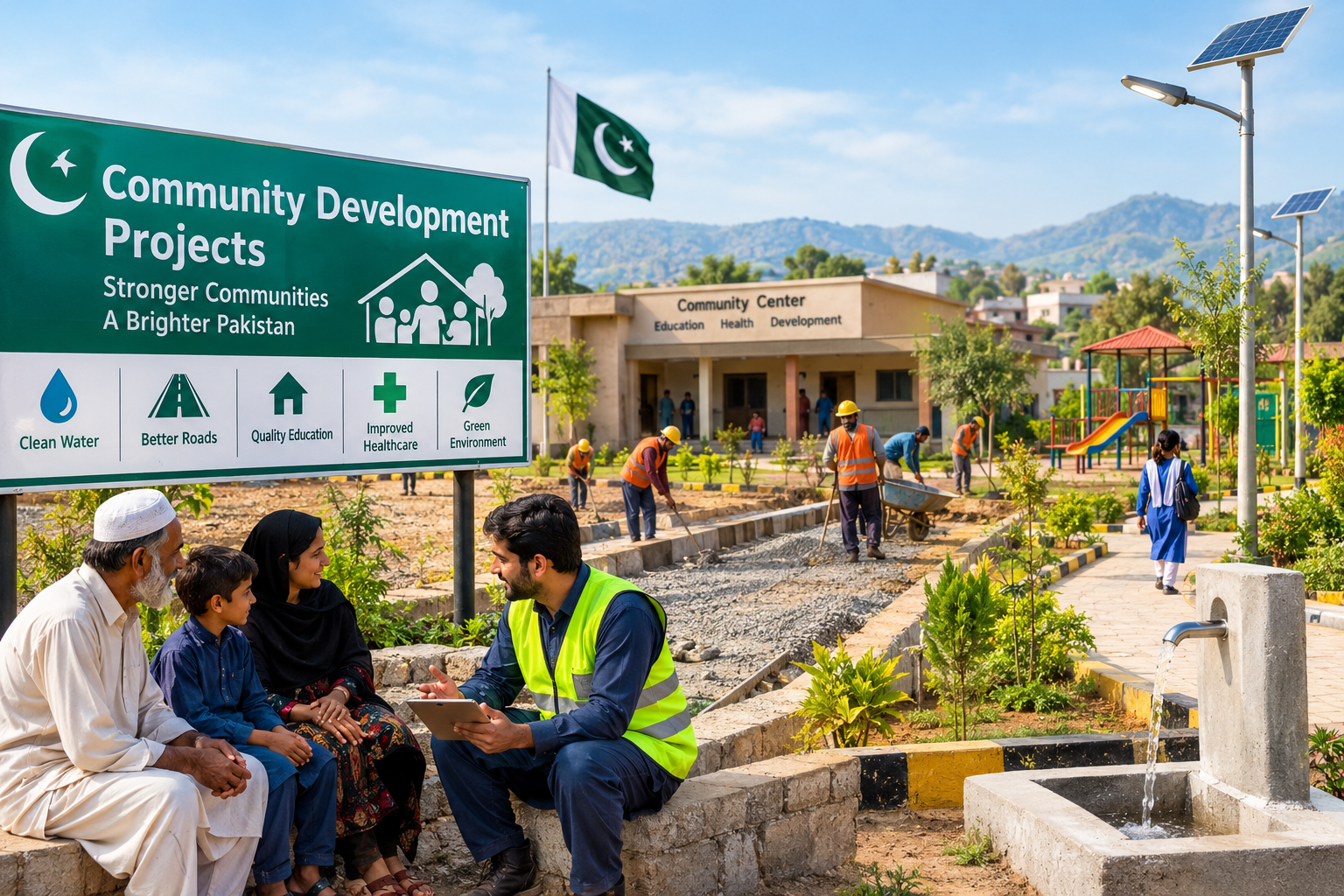
Community development is an important part of building a better future for Pakistan. When we talk about development, many people immediately think about large highways, shopping centers, modern buildings, and major infrastructure projects. However, real development also begins at the local level, where ordinary people need clean drinking water, better roads, quality education, affordable healthcare, proper sanitation, and safe public spaces.
In my opinion, new community development projects in Pakistan are important because they can improve everyday life for families in cities, towns, and villages. A small road connecting a village to a nearby market can help farmers sell their products more easily. A renovated government school can give children a better learning environment. Similarly, a clean water supply project can help a neighborhood meet one of its most basic needs.
Pakistan has communities with different challenges. Large cities need better traffic management, waste collection, and affordable housing, while rural areas may need improved access to schools, health facilities, drinking water, and reliable roads. This is why local development should focus on the actual needs of residents instead of following the same approach everywhere.
In this article, I will explain the main types of community development projects, their potential benefits, the challenges they face, and how citizens can stay informed about development activities in their areas.
What Are Community Development Projects?
Community development projects are organized efforts designed to improve living conditions and provide useful facilities for local residents. These projects may be introduced by federal or provincial governments, local authorities, nonprofit organizations, development partners, or community groups.
The purpose is not simply to construct new buildings. Effective development should address real problems and create long term benefits for the people who use the facilities.
For example, a local development project might include repairing damaged streets, installing streetlights, improving drainage systems, establishing a basic health facility, renovating a public school, or creating a playground for children.
In Pakistan, the needs of communities vary considerably. A neighborhood in Lahore may require improved drainage and traffic management, while a remote village in Balochistan may prioritize access to drinking water and basic healthcare.
For this reason, successful community development begins with understanding local conditions and consulting the people who will benefit from the project.
1. Road Construction and Local Infrastructure Improvements

Better roads are among the most visible forms of community development. Roads connect people with schools, hospitals, workplaces, agricultural markets, and other essential services.
In many areas, damaged streets and poorly maintained rural roads make everyday travel difficult. During heavy rainfall, some roads become difficult to use, affecting students, workers, patients, and business owners.
New road construction and rehabilitation projects can improve local connectivity when they are planned carefully. Projects may include repairing existing roads, improving street surfaces, constructing sidewalks, adding drainage channels, and installing road signs.
From my point of view, road development should not focus only on laying new asphalt. Proper drainage and regular maintenance are equally important. A road that looks impressive when completed may deteriorate quickly if rainwater collects on its surface or heavy vehicles damage it.
Local authorities should also consider pedestrian safety, accessibility for people with disabilities, and safe routes near schools and healthcare facilities.
Residents can follow official announcements from their municipal authorities, provincial communication departments, and relevant development agencies to learn about proposed and ongoing road improvement schemes.
2. Clean Drinking Water and Sanitation Projects
Access to clean drinking water is a basic community need. Water supply and sanitation projects can improve household convenience, public hygiene, and the overall living environment.
Depending on local requirements, these projects may involve repairing water pipelines, installing filtration plants, improving water storage, maintaining public water points, and upgrading sewage systems.
In rural communities, reliable water supply can reduce the time families spend collecting water. In urban neighborhoods, repairing leaking pipes and improving drainage can help address persistent infrastructure problems.
However, installing a water filtration plant is only one part of the solution. The water must be tested regularly, filters must be maintained, and residents need a reliable way to report problems.
Sanitation projects are also essential. Proper sewage management, functional drainage channels, and organized waste collection can make streets cleaner and help reduce exposure to environmental hazards.
I believe local communities should pay attention to the long term operation of these facilities. A project provides lasting value when clean water remains available and sanitation services continue working after construction ends.
3. Education and School Improvement Projects

Education is one of the most important areas of community development in Pakistan. A community cannot make lasting progress if children do not have access to safe schools, qualified teachers, and suitable learning materials.
School improvement projects can include classroom repairs, new classrooms, clean drinking water, functional washrooms, boundary walls, libraries, computer facilities, and better furniture. In areas where students travel long distances, improving nearby schools can make education more accessible.
Digital learning facilities can also create opportunities for students who have limited access to educational resources. However, providing computers without electricity, internet access, or trained teachers may not deliver the expected results.
In my opinion, education projects should focus on learning outcomes as well as physical facilities. A newly painted school building is useful, but the real achievement is helping students develop reading, writing, mathematics, and practical skills.
Parents and local community members can support school development by participating in meetings, discussing educational needs, and reporting maintenance problems to the relevant authorities.
4. Healthcare Facilities and Community Medical Services
Healthcare is another essential part of local development. Families need access to medical advice, preventive care, maternal health services, vaccinations, and emergency assistance without facing unnecessary travel difficulties.
Community healthcare projects may include upgrading basic health units, repairing rural health centers, improving medicine storage, providing diagnostic equipment, and expanding awareness campaigns.
In smaller communities, improving existing healthcare facilities may be more practical than constructing entirely new buildings. A functioning clinic with trained staff and essential medicines can provide greater value than a large facility that lacks the resources to serve patients.
Health awareness programs can also help people understand hygiene, nutrition, vaccination, and the importance of seeking qualified medical advice when needed.
I believe healthcare development should be measured by the services people actually receive. Authorities need to consider staff availability, equipment maintenance, medicine supplies, and patient access when evaluating a project.
Community members can check official health department announcements to learn about facility upgrades and public health initiatives in their districts.
5. Affordable Housing and Neighborhood Improvement
Safe housing is closely connected with family security, health, and economic stability. In growing Pakistani cities, population increases can place pressure on housing, water supplies, roads, and sanitation systems.
Community development programs may support housing improvements, neighborhood rehabilitation, basic infrastructure for residential areas, and services for families living in vulnerable conditions.
Neighborhood improvement can also involve repairing public walkways, improving street lighting, maintaining parks, and creating safer spaces for children and older residents.
Housing initiatives should be planned carefully so that residents understand eligibility requirements, costs, application procedures, and project timelines. People should verify housing announcements through official channels before paying fees or sharing personal documents.
In my view, successful housing development means more than constructing houses. Families also need access to transportation, education, healthcare, employment, and essential utilities.
A well planned residential community can improve living standards when these services are considered from the beginning.
6. Youth Skills Development and Employment Opportunities
Young people represent an important source of energy, creativity, and potential for Pakistan’s future. However, many young people need practical skills and employment opportunities to turn their abilities into productive work.
Community development projects can help address this challenge through vocational training centers, digital skills programs, technical education, entrepreneurship workshops, and career guidance services.
Training may cover computer literacy, graphic design, office administration, electrical work, plumbing, tailoring, agricultural techniques, and other locally relevant skills.
The most useful programs are those that consider the employment opportunities available in the surrounding area. For example, a community with a strong agricultural economy may benefit from training in food processing, modern farming methods, and small business management.
I believe youth development programs should combine classroom learning with practical experience. Participants should understand how to apply their skills, prepare a CV, communicate professionally, and search for legitimate employment opportunities.
Students and job seekers can look for verified announcements from government skills development authorities, public training institutions, and established nonprofit organizations.
7. Parks, Green Spaces, and Environmental Projects

Public parks and green spaces can make neighborhoods more attractive and comfortable. They give children a place to play, provide residents with opportunities for physical activity, and create shared spaces where neighbors can interact.
Environmental development projects may include planting trees, restoring public parks, improving waste collection, cleaning public spaces, and installing energy efficient streetlights.
In areas experiencing hot summers, suitable trees and shaded public spaces can improve outdoor comfort. However, planting initiatives should consider local weather conditions, water availability, and the long term care of trees.
Waste management is equally important. Communities need practical systems for collecting rubbish, maintaining public bins, and reducing illegal dumping.
From my perspective, environmental projects should involve residents rather than depending entirely on government workers. Local schools, community organizations, and neighborhood groups can help maintain parks and encourage responsible waste disposal.
The goal should be to create cleaner and healthier surroundings that remain useful for years.
8. How to Find Updates About New Community Development Projects in Pakistan
Finding reliable information is important because development announcements can change as budgets, approvals, and construction schedules change.
Residents can use several methods to follow community development projects in Pakistan.
Check official government websites. Provincial government departments, district administrations, municipal bodies, and relevant development authorities may publish project announcements, notices, tenders, and progress updates.
Follow local administration announcements. District offices and municipal authorities may share information about road repairs, drainage work, sanitation improvements, and public facilities.
Read credible local news. Established news organizations can help residents understand the purpose of a project, its expected benefits, and any reported delays. Important claims should be compared with official statements whenever possible.
Attend community meetings. Public consultations and local meetings can provide information about proposed projects and allow residents to raise concerns.
Verify information before sharing it. An announcement on social media does not automatically mean a project has been approved or funded. Check the issuing department, publication date, project details, and official contact information.
I recommend keeping a simple record of the project name, location, responsible department, announced budget if available, expected completion date, and latest verified update. This makes it easier to compare announcements with actual progress.
9. Challenges Facing Community Development Projects
Although community development projects can bring important benefits, several challenges may affect their success.
One common challenge is insufficient funding. Some projects begin with ambitious plans but face delays when funds are released slowly or costs increase. Poor planning can also create difficulties when authorities overlook drainage, maintenance, or the availability of essential services.
Another concern is the lack of transparency. Residents need clear information about project objectives, responsible departments, approved budgets, and expected completion dates. When this information is difficult to obtain, it becomes harder for the public to assess progress.
Maintenance is equally important. Roads, parks, water facilities, and public buildings require regular attention after construction is completed. Without maintenance arrangements, the value of an otherwise successful project may decline over time.
In my opinion, local authorities should involve residents from the planning stage and provide regular progress updates. Community participation can help identify practical problems early and improve public confidence.

10. How Citizens Can Participate in Local Development
Community development is not only the responsibility of government departments. Residents can also contribute by identifying local needs, sharing verified information, and helping protect public facilities.
For example, residents can report damaged roads, broken streetlights, overflowing drains, and water supply problems through the relevant official complaint channels.
Community members can also participate in neighborhood meetings, support local cleanliness campaigns, volunteer in public awareness activities, and encourage young people to develop useful skills.
It is important to report concerns respectfully and provide accurate details, such as the location of a problem and any relevant photographs. When possible, residents should keep complaint reference numbers and follow up through official channels.
People should also avoid spreading unverified claims about development budgets, government schemes, or eligibility requirements. Accurate information helps communities make better decisions.
I believe that cooperation between citizens and local authorities can improve the planning, implementation, and maintenance of public projects.
11. What Makes a Community Development Project Successful?
A successful community development project should solve a real problem and provide lasting benefits.
Before starting a project, authorities should assess local needs, estimate costs, identify suitable locations, and consult the people who will use the facilities.
During implementation, progress should be monitored to ensure that work meets appropriate standards. Clear communication can help residents understand what is happening and when services are expected to become available.
After completion, authorities should evaluate whether the project is delivering its intended results. For example, a road improvement project can be assessed by its condition, accessibility, drainage, and usefulness to local residents.
Similarly, a school improvement project should be evaluated by the quality and availability of facilities, while a water supply project should be assessed by water quality, reliability, and maintenance.
In my view, the true measure of development is not simply how much money is spent or how many projects are announced. It is how effectively those projects improve people’s lives.
Conclusion
New community development projects in Pakistan can contribute to stronger neighborhoods, better public services, and improved living standards. Projects involving roads, drinking water, sanitation, education, healthcare, affordable housing, youth skills, and environmental improvement can address many of the challenges faced by local communities.
However, successful development requires more than announcements and construction work. Careful planning, transparent spending, public participation, quality standards, and long term maintenance are all essential.
As I see it, every community has different needs, and development plans should reflect those differences. A village may need reliable drinking water and better access to schools, while an urban neighborhood may require improved drainage, waste collection, and safer public spaces.
Citizens can contribute by following verified local government updates, reporting problems through official channels, participating in community discussions, and protecting public facilities.
Ultimately, new community development projects in Pakistan should aim to make everyday life safer, healthier, and more convenient for ordinary people. When government institutions and local residents work together, even small improvements can create meaningful and lasting change.