Introduction
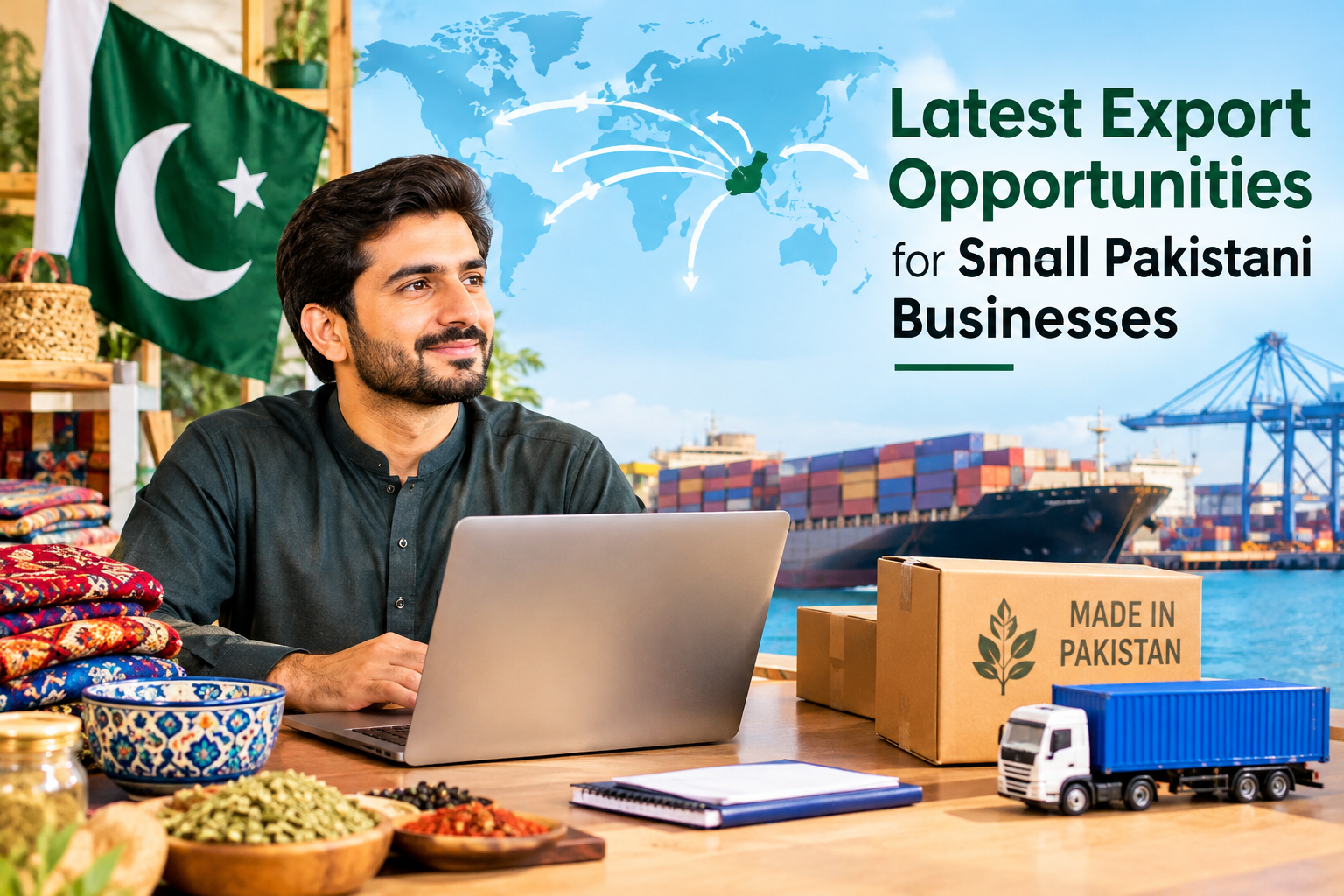
Pakistan has great potential to expand its exports through small businesses, home based entrepreneurs, online sellers, and local manufacturers. The country produces a wide range of products, including textiles, sports goods, leather products, rice, spices, handmade crafts, and agricultural items. Many of these products are already popular in international markets, while others offer new opportunities for businesses that understand changing customer needs.
In my view, exporting is no longer an opportunity reserved only for large factories and established companies. Small Pakistani businesses can also reach international customers by using online marketplaces, social media, digital payment services, and reliable shipping companies. However, success requires more than simply finding a foreign buyer. Businesses must offer consistent quality, competitive prices, professional packaging, and dependable delivery.
The latest export opportunities for small Pakistani businesses are particularly interesting because entrepreneurs can begin with a focused product range instead of investing in a large factory or warehouse. By choosing the right market and understanding export requirements, even a small business can gradually develop an international customer base.
1. Textile and Clothing Exports
Textiles remain one of Pakistan’s most recognized export sectors. The country has an established textile industry, skilled workers, and access to cotton and related manufacturing facilities. Small businesses can benefit from this experience by producing specialized products for international customers.
Potential export products include cotton T shirts, casual clothing, bedsheets, towels, cushion covers, scarves, baby clothing, and reusable fabric bags. Businesses can also explore customized clothing for small fashion brands that want limited production runs.
Instead of competing directly with large manufacturers on price, I believe small exporters should focus on a specific customer group. For example, a business could offer embroidered clothing, customized uniforms, premium cotton bedding, or handmade textile products.
Quality is essential in this sector. International buyers may expect accurate sizing, durable stitching, consistent colors, and clear product descriptions. Small businesses should prepare samples before accepting large orders and calculate production, packaging, shipping, and payment costs carefully.
2. Sports Goods and Fitness Products
Pakistan, particularly Sialkot, is widely associated with sports goods manufacturing. This creates opportunities for small businesses that can source quality products or work with local manufacturers.
Possible export products include footballs, training equipment, boxing accessories, sportswear, gym bags, and selected fitness accessories. Businesses can also investigate customized products for sports clubs, schools, training centers, and independent brands.
Customization can help small exporters stand out. A buyer may want a specific logo, color combination, or packaging design rather than a standard product available from many suppliers.
However, product specifications and safety requirements should never be ignored. Sports equipment intended for professional use may need to meet particular standards. Businesses should confirm the buyer’s requirements before manufacturing and avoid making unsupported claims about product certification.
3. Rice, Spices, and Packaged Food Products
Agricultural products provide another important export opportunity for Pakistani small businesses. Pakistan is known for varieties of rice, including basmati, as well as numerous spices and traditional food ingredients.
Small businesses may explore rice, dried herbs, spice blends, lentils, and selected shelf stable food products. There can also be opportunities for products aimed at Pakistani communities living abroad, particularly customers seeking familiar ingredients and traditional flavors.
The main challenge is that food exports involve more than sourcing an attractive product. Importing countries may require specific food safety documentation, labeling, ingredient information, traceability, and approved packaging. Some products may also require laboratory testing or additional permits.
For this reason, beginners should research the regulations of their target market before purchasing inventory. Working with an experienced food processor or exporter can help reduce avoidable mistakes.
Businesses should also calculate shelf life, storage conditions, and transport costs. A product that sells well locally may not remain profitable after international shipping and compliance expenses.
4. Leather Products and Handmade Crafts
Pakistani artisans and manufacturers produce a variety of leather goods and traditional handicrafts. Small businesses can explore wallets, belts, handbags, travel accessories, handmade decorations, embroidered items, and home décor products.
These products may appeal to customers who appreciate craftsmanship, distinctive designs, and cultural influences. Online selling gives entrepreneurs an opportunity to present products directly to international buyers without immediately establishing a physical shop abroad.
In my opinion, presentation is particularly important for handmade goods. Clear photographs, accurate dimensions, material details, and attractive packaging can make a small business appear more professional.
Entrepreneurs should also consider ethical sourcing, material durability, and the environmental requirements of their destination market. Certain animal derived materials and leather treatments may face specific restrictions.
A practical starting point is to create a small collection, test customer interest, and expand only after identifying products that generate repeat orders.