
Introduction
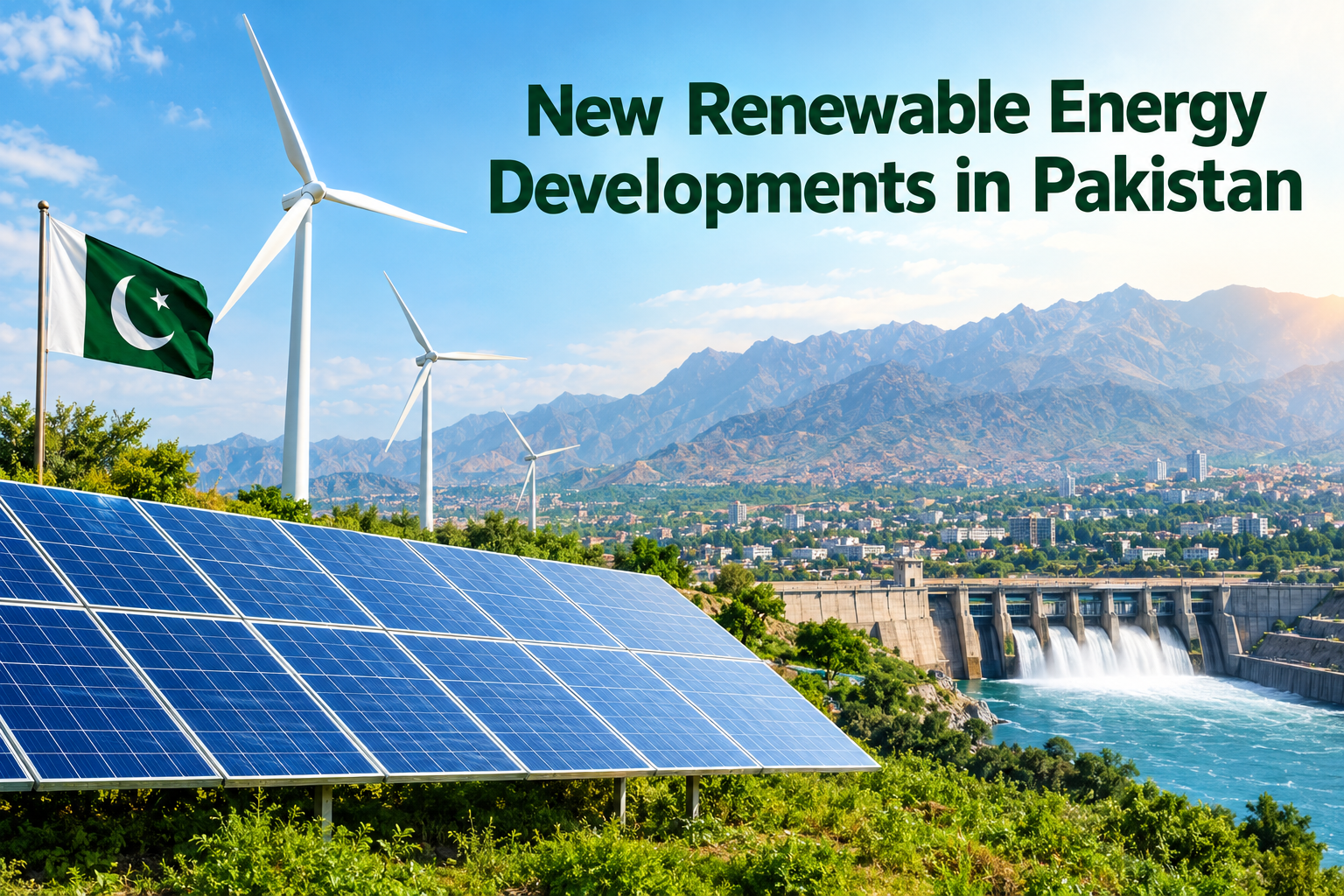
Renewable energy is becoming an increasingly important part of Pakistan’s energy future. Rising electricity bills, dependence on imported fuels, environmental concerns, and growing energy demand have encouraged the country to explore cleaner and more affordable sources of power. From rooftop solar panels to large wind farms and hydropower projects, new renewable energy developments in Pakistan are creating opportunities for households, businesses, farmers, and industries.
In my view, renewable energy is not simply an environmental choice. It is also a practical way to improve energy security, reduce long term electricity costs, and support economic development. Pakistan has considerable potential for solar, wind, hydropower, and biomass energy, although turning this potential into reliable electricity requires proper planning, investment, and modern infrastructure.
Understanding these developments helps explain how Pakistan can gradually build a more sustainable energy system and reduce some of the challenges associated with conventional electricity generation.
1. Solar Energy Is Expanding Across Pakistan
Solar energy is one of the most visible renewable energy developments in Pakistan. The country receives abundant sunlight throughout much of the year, making solar power a practical option for homes, commercial buildings, agricultural land, and industrial facilities.
In recent years, more households and businesses have installed solar panels to manage electricity expenses and reduce their dependence on the national grid. Rooftop solar systems are particularly attractive for consumers who experience high daytime electricity usage. Shops, offices, schools, factories, and hospitals can also benefit from generating part of their electricity on site.
Large solar power projects are another important part of this transition. Utility scale solar farms can supply electricity to the grid, while smaller distributed systems can generate power close to where it is consumed.
I believe one of the biggest advantages of solar energy is its flexibility. A homeowner can begin with a small system and expand it later, while a large business can install a more powerful setup according to its electricity needs.
However, consumers should consider installation quality, inverter performance, warranties, maintenance, and battery requirements before investing. Solar panels can produce substantial electricity during sunny hours, but evening consumption and cloudy weather require careful planning.
2. Growth of Rooftop Solar Systems
Rooftop solar systems are changing how many Pakistani consumers think about electricity. Instead of depending entirely on power supplied by the national grid, households can generate some of their own energy using panels installed on rooftops.
This development is especially relevant in cities such as Lahore, Karachi, Islamabad, Faisalabad, and Multan, where residential and commercial buildings have considerable rooftop space. Smaller towns and rural communities can also benefit from solar installations.
One reason for this growth is the opportunity to reduce electricity purchases during daylight hours. Families that operate fans, refrigerators, water pumps, and other appliances during the day may find solar power particularly useful.
Battery storage can provide additional flexibility by storing excess electricity for later use. However, batteries increase the initial installation cost and eventually require replacement. A grid connected system without batteries may suit some households, while a hybrid system can be more appropriate for consumers who need backup power during outages.
Pakistan’s rooftop solar market also highlights the importance of fair and predictable regulations. Changes to electricity tariffs, grid connection rules, and net metering or other distributed generation arrangements can affect the financial benefits of an installation. Consumers should check the current rules with their electricity distribution company before making a purchase.
3. Wind Energy Projects in Sindh and Balochistan
Wind energy is another important area of renewable energy development in Pakistan. Coastal areas and selected inland locations have wind resources that can support electricity generation.
The Jhimpir and Gharo wind corridors in Sindh are particularly significant because their wind conditions have attracted multiple wind power projects. These projects use large turbines to convert moving air into electricity that can be supplied to the national grid.
Wind power can complement solar energy because wind conditions and solar production do not always follow the same daily pattern. Combining these resources can help diversify electricity generation and reduce dependence on any single source.
Balochistan also has areas with potential for wind energy development. Nevertheless, projects in remote locations require investment in transmission lines, roads, equipment transport, and maintenance services.
In my opinion, wind energy deserves continued attention because it can contribute to a more balanced renewable energy mix. The most successful projects will be those that combine suitable locations with reliable grid connections, transparent contracts, and proper environmental assessments.
4. Hydropower Remains an Important Energy Source
Hydropower has long contributed to Pakistan’s electricity supply, and it remains an important part of the country’s renewable energy future. Rivers, dams, and mountainous regions provide opportunities to generate electricity from flowing water.
Large projects such as the Diamer Bhasha and Mohmand dams are associated with wider objectives that include water storage, irrigation support, and hydropower generation. Their development involves complex engineering, financing, construction, and environmental considerations, so their benefits depend on successful completion and operation.
Existing hydropower facilities also require maintenance and modernization to improve reliability and efficiency. In addition, smaller hydropower plants may offer opportunities in suitable areas where local water resources can support electricity generation.
Hydropower has an important advantage because some facilities can adjust their output to help balance changes in electricity demand. However, performance depends on water availability, reservoir management, seasonal river flows, and drought conditions.
Pakistan should therefore treat hydropower as part of a diversified strategy rather than relying on it alone. Combining water based electricity with solar, wind, and appropriate storage can create a more resilient energy system.

5. Battery Storage and Modern Energy Technology
Energy storage is becoming increasingly relevant as Pakistan adds more solar and wind power. These renewable sources do not produce electricity at a constant rate throughout the day, which makes storage and better grid management important.
Battery systems can store surplus solar electricity and release it when production falls. For households, this may mean using stored power after sunset or during a grid outage, depending on the system design. For businesses, storage can help manage peak demand and improve electricity reliability.
At a larger scale, battery energy storage systems can support grid stability, respond quickly to changes in demand, and help integrate variable renewable generation. Their effectiveness depends on cost, capacity, operating conditions, and how they are coordinated with the electricity network.
Smart inverters, digital monitoring, improved forecasting, and modern control systems can also make renewable energy systems more efficient.
I believe technology will play a major role in determining how much benefit Pakistan receives from its growing solar and wind capacity. Installing renewable equipment is only one part of the process. Managing electricity production, storage, and distribution is equally important.
6. Renewable Energy for Agriculture
Agriculture is a major part of Pakistan’s economy, and renewable energy can support farmers in several practical ways. Solar powered water pumps are one example. They can reduce reliance on diesel engines or grid electricity where local conditions make solar pumping suitable.
Farmers may also use solar power for lighting, small machinery, cooling systems, and selected post harvest operations. Reliable electricity can help improve the handling and storage of agricultural products, particularly where conventional power supplies are unreliable.
In Punjab, where irrigation and agricultural production are central to rural livelihoods, solar pumping can be attractive. However, farmers should assess installation costs, water availability, pump efficiency, and the long term effects of increased groundwater extraction.
Solar pumping should be combined with responsible water management. If electricity becomes cheaper to obtain, some users may pump more groundwater than is sustainable. Efficient irrigation methods, groundwater monitoring, and appropriate pumping rules can help prevent this problem.
Renewable energy can support agricultural productivity, but its success depends on using technology responsibly and ensuring that smaller farmers have access to reliable equipment and financing.
7. Government Policies and Private Investment
Government policies and private investment will strongly influence the future of renewable energy in Pakistan. Clear regulations can encourage businesses to invest in solar parks, wind farms, hydropower facilities, and electricity storage.
Investors need predictable rules for project approvals, land use, grid connections, electricity sales, and payment arrangements. When policies change frequently or projects face long delays, financing becomes more difficult and development costs can increase.
Pakistan also needs to strengthen its electricity transmission and distribution networks. Renewable projects cannot deliver their full value if the grid cannot transport the electricity they generate to consumers.
Private companies, banks, development institutions, and international partners can contribute financing, technical expertise, and equipment. Local manufacturing and training programs can create additional opportunities for engineers, technicians, installers, and maintenance workers.
For long term progress, policy decisions should balance consumer interests, grid stability, investment needs, and environmental protection. Regular publication of project progress and reliable energy statistics would also help the public understand what is being achieved.
8. Economic and Environmental Benefits
Renewable energy can offer several benefits to Pakistan’s economy. Generating more electricity from domestic sunlight, wind, and water can reduce exposure to international fuel price fluctuations. Solar power can also help households and businesses manage daytime electricity consumption.
The renewable energy sector can create employment in installation, engineering, maintenance, manufacturing, project management, and technical training. Small businesses may find opportunities in equipment sales and after sales services, particularly as demand for solar systems grows.
Environmental benefits are another important consideration. Solar and wind power produce electricity without directly burning fossil fuels during operation, helping reduce greenhouse gas emissions and certain forms of air pollution compared with fossil fuel generation.
However, renewable projects are not completely free of environmental impacts. Solar panels, batteries, turbines, and other equipment require raw materials, transportation, and eventual recycling or disposal. Hydropower projects can also affect rivers, land, and nearby communities.
Good planning, environmental assessments, safe waste management, and responsible equipment recycling can help Pakistan maximize the benefits while limiting negative effects.
9. Challenges Facing Renewable Energy Development
Despite its potential, Pakistan faces several challenges in expanding renewable energy. The initial cost of quality equipment can be difficult for low income households and small businesses to afford. Access to financing, dependable installers, and after sales support also varies across the country.
Grid limitations can create additional problems when renewable electricity production grows faster than transmission capacity. Electricity market rules and changes to tariffs can also influence whether projects remain financially attractive.
Another challenge is the need for skilled workers. Solar panels, batteries, inverters, wind turbines, and modern power systems require proper installation, testing, and maintenance.
Pakistan can address these challenges through transparent policies, technical education, responsible financing, improved grid infrastructure, and clear consumer protection standards. Authorities and energy companies should also make it easier for consumers to understand system costs, warranties, safety requirements, and applicable electricity rules.
Conclusion
New renewable energy developments in Pakistan offer a valuable opportunity to improve electricity security, support economic growth, and reduce environmental pressures. Solar power is expanding across homes and businesses, wind energy continues to contribute through projects in suitable regions, and hydropower remains an important part of the country’s electricity system. Battery storage, modern grid technology, and solar powered agricultural equipment can provide further benefits.
In my view, Pakistan’s renewable energy future will depend on more than installing additional panels and turbines. The country also needs reliable transmission infrastructure, stable regulations, affordable financing, skilled workers, and responsible management of water and other natural resources.
With practical planning and continued investment, renewable energy can become an increasingly important source of electricity for households, farms, industries, and communities. The goal should be to build an energy system that is cleaner, more reliable, and financially sustainable for future generations.


